
As the retail landscape evolves, many businesses are exploring Electronic Shelf Labels (ESLs) as part of their digital transformation strategy. The benefits are clear—improved operational efficiency, enhanced sustainability, and more accurate pricing.
Yet, transitioning to ESLs can feel daunting, especially for retailers managing multiple stores and a wide range of products. From ensuring pricing consistency to balancing hybrid systems during the rollout, the challenges seem significant.
At Last Yard, we’ve worked with retailers navigating these exact concerns. Here are some key considerations to help guide your ESL journey.
1. Creating a Unified Customer Experience
Switching to ESLs often starts as a phased process, with retailers running paper ticketing systems alongside ESLs. This hybrid approach can create challenges such as:
- Duplicating pricing and compliance rules.
- Training staff to navigate two systems.
- Designing label templates for both formats.
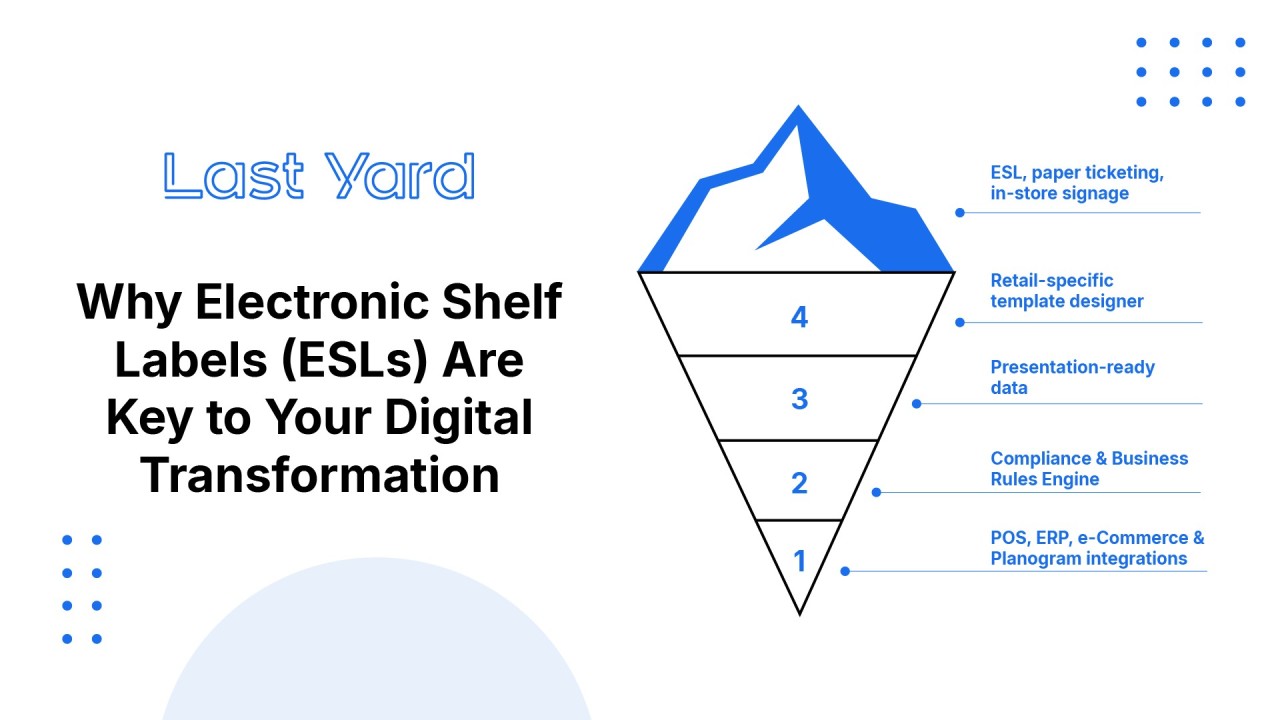
These hurdles can increase complexity and costs during the transition. That’s why having a platform that integrates paper ticketing, ESLs, and other digital signage into a single source of truth is invaluable.
It’s not just about the technology—it’s about ensuring consistency across customer touchpoints, whether that’s paper tickets, ESLs, digital shelf displays, or social media. A unified approach allows retailers to phase in digital transformation without disrupting day-to-day operations.
2. Ensuring Pricing Precision
While ESLs make it easier to fix errors quickly, preventing those errors altogether is just as important. Retailers know that even small pricing mistakes result in significant financial and reputational consequences.
We’ve seen firsthand how building a robust pricing rules engine can address this challenge. By tailoring rules and templates to the unique demands of each retailer, pricing precision becomes a strength, not a worry.
Choosing tools that can adapt to changing business needs is also essential. For example, templates and rules that aren’t hard-coded allow retailers to adjust promotions or comply with new regulations quickly, without requiring extensive development work.
3. Simplifying ESL Design
Designing ESLs often becomes a bottleneck when retailers rely on third-party providers. Communicating dynamic pricing and promotion data can lead to delays and missed opportunities.
Empowering in-house teams with user-friendly design tools makes a big difference. For instance, a drag-and-drop interface for creating ESL templates enables quicker turnaround times and more control over the process.
For instance, one retailer we worked with designed a Mother’s Day promotion template in just five minutes, reducing the stress of meeting tight deadlines. By simplifying this process, retailers can focus more on their customers and less on logistical challenges.
Future-Proofing the Retail Experience
Adopting ESLs is about more than digitizing price labels—it’s about future-proofing operations. The flexibility to adapt as market demands evolve ensures that retailers stay competitive in a fast-changing industry.
Whether transitioning store-by-store or across an entire network, it’s worth approaching ESL adoption as an opportunity to improve consistency, reduce inefficiencies, and enhance the in-store experience for customers and staff alike.


About the author
Serene Tan
Serene is a strategic marketer at Last Yard, leading marketing across multiple markets with a focus on go-to-market strategy, brand positioning, and integrated campaigns that build awareness and drive growth. With deep expertise in B2B buying journeys, she combines creative storytelling with operational execution to deliver results across long sales cycles.