
In a world where a shopper can see a sale price on a mobile ad and instantly compare it to the shelf tag in-store, any discrepancy is a recipe for lost trust and lost sales. Retail executives are realizing that unified, real-time accuracy isn’t a back-office nicety, it’s mission-critical. From shelf-edge pricing to in-store digital screens, consistency across channels has become the new battleground for customer loyalty and revenue growth.
This article explores how leading retailers are evolving towards a unified, AI-powered retail operating model – one that seamlessly links pricing, promotions, media, and execution – and why platforms like Last Yard are emerging as the digital bridge in this transformation.
Shelf-Edge Accuracy: A Non-Negotiable Foundation
Mistakes at the shelf edge are no longer mere clerical errors; they are front-page issues in the omnichannel age. Shelf-edge price and promotion accuracy now directly drive both sales and advertising revenue. Shoppers armed with smartphones will spot a mismatch between your online promo and the in-store price in seconds, and more than 3 out of 4 U.S. consumers actively compare prices on the spot.
If a website or smart TV ad promises a discount but the electronic shelf label shows a higher price, everyone loses. The retailer loses the sale (and faces a disgruntled customer), while the retail media network loses credibility and click-through. It’s no surprise that 56% of global in-store shoppers voice dissatisfaction when they discover such pricing inconsistencies.
Beyond customer backlash, the legal stakes are rising. Regulators and class-action lawyers are now targeting shelf-to-till price discrepancies, which have led to high-profile lawsuits and fines for major retailers. In short, getting the price right at the shelf and keeping it in sync with every other channel has become non-negotiable for protecting brand trust and margin.
Bridging the Gap Between Trade Marketing and Retail Media
The rise of retail media networks, where retailers sell in-store ad space to brands, has created new revenue opportunities, but also new complexities. Retail media is booming, expected to reach $130 billion in the U.S. by 2028, with margins far surpassing traditional retail. However, these media divisions often operate separately from trade marketing teams, which manage in-store promotions.
Different budgets, KPIs, and timelines lead to execution disconnects. It’s not uncommon for a product to be promoted at a discounted price in-store while a programmatic ad or store screen advertises it at full price. These inconsistencies waste media spend, erode shopper trust, and create operational headaches.
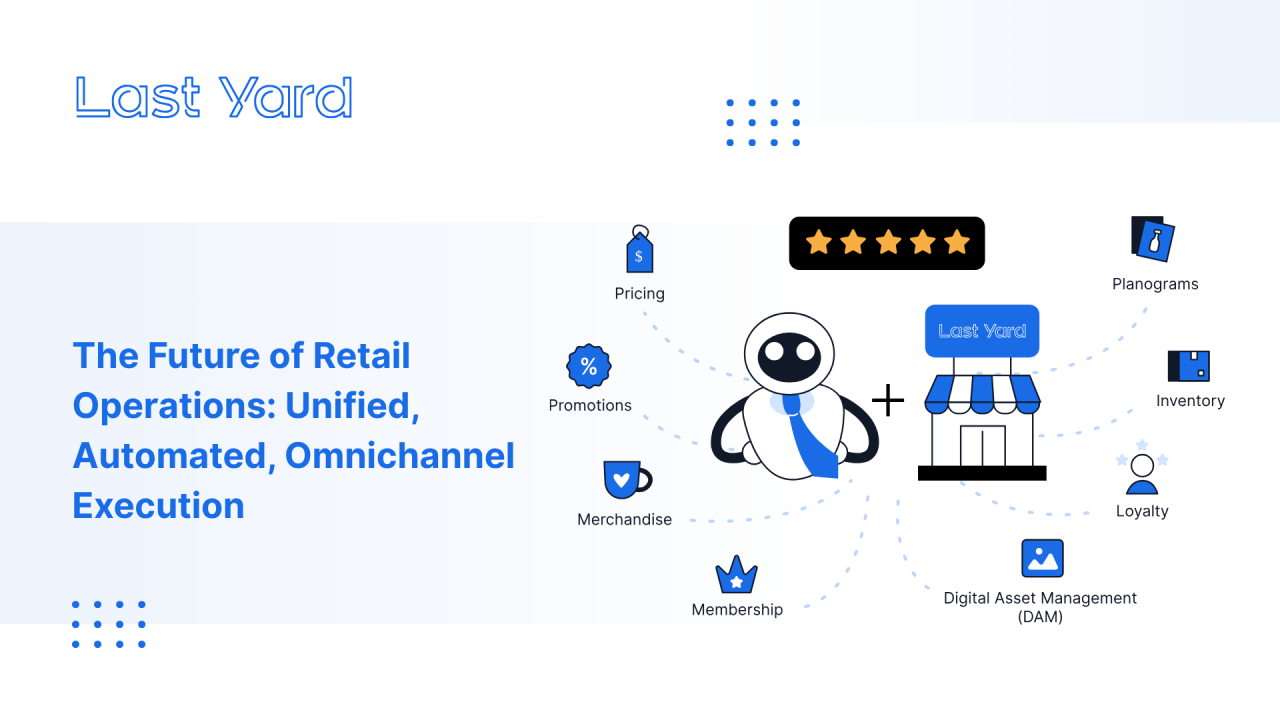
The path forward is integration. Leading retailers are beginning to merge these workflows, treating every price and promotion as part of a unified customer experience. Platforms like Last Yard act as a “promotion spine,” ensuring that trade-funded discounts and retail media campaigns pull from the same data source, calendar, and creative assets. This alignment ensures shoppers receive a consistent message, suppliers see their funds efficiently spent, and retailers maximize both sales and media ROI.
Data Fragmentation and Timing Chaos
One of the biggest execution challenges is fragmented data and disconnected calendars. Retailers juggle myriad spreadsheets, siloed systems, and separate planning cycles for in-store and online campaigns. The result? Timing chaos, last-minute scrambles, and mismatched promotions that confuse customers and frustrate store teams.
When pricing files reside in one system and media content in another, it’s easy for a promotion to fall through the cracks. A discount scheduled for Monday may not reach every shelf tag for several days, while digital ads continue running outdated offers.
The fix is a centralized platform that governs all customer-facing activities. Last Yard provides this by linking merchandising systems, POS, ESLs, and media ad servers to a single, real-time workflow. Approvals, scheduling, and updates happen within one ecosystem, eliminating the chaos of dueling spreadsheets and ad-hoc fixes. The result? Improved execution fidelity and a seamless shopper experience.
Automation and AI: The Intelligent Competitive Edge
Manual processes are no longer viable at the scale and speed of modern retail. AI-driven automation is transforming operations, from dynamic pricing adjustments to compliance monitoring.
Tasks that once required hours of manual labor, such as printing and swapping shelf labels, can now be executed in seconds. For instance, a retailer leveraging Last Yard’s platform can push a price change to thousands of shelf tags, POS terminals, and digital screens with a single click. This automation not only reduces labor costs but also ensures real-time accuracy across all touchpoints.
An AI-ready platform like Last Yard centralizes every promotion into a single object, storing prices, creative assets, timing, and segmentation. Through open APIs, this object is distributed instantly to ESLs, POS systems, mobile apps, and in-store displays. Sales data, stock levels, and media performance flow back into the system, creating a closed loop for continuous optimization.
Automation also enforces compliance through:
- Role-based approvals to ensure governance and accountability
- Audit trails for transparent oversight
- Proactive issue detection, flagging discrepancies before they reach the customer
For example, if a shelf label fails to update, the system immediately alerts the right team. AI can also trigger A/B tests, optimize creative based on early performance, and ensure flawless execution across every store. Crucially, Last Yard doesn’t require a tech stack overhaul. It acts as a “digital bridge,” connecting existing systems and vendors while harmonizing data and timing.
The Store as a High-Performing Media Platform
Retailers are now viewing their stores not just as sales venues, but as media platforms. In-store media, whether digital screens, smart shelf displays, or audio ads, offers brands a direct line to shoppers at the point of decision.
However, monetizing these assets requires precision. An ad for “20% off this week” must reflect the correct shelf price and POS data; otherwise, it undermines credibility. A unified platform ensures content and pricing are always aligned, creating a seamless experience for the shopper and a trusted channel for brands.
Dynamic content triggers further enhance the opportunity. Imagine shelf displays that automatically highlight umbrella discounts when it starts raining, or promote slow-moving inventory based on local demand. These real-time, data-driven activations transform the store into a responsive, high-performing media environment.
Platforms like Last Yard manage content synchronization across online and in-store media, ensuring consistency while enabling localized, contextual messaging. This not only boosts media revenues but also enhances shopper engagement, turning in-store ads into a genuine value-add.
Conclusion: Toward a Unified Retail Operating Model
The future of retail is unified, automated, and omnichannel. Retailers who break down silos and invest in AI-ready platforms are positioning themselves to deliver seamless customer experiences while unlocking new revenue streams.
The alternative of clinging to fragmented systems and manual processes means missed opportunities and operational drift. By contrast, those embracing a unified promotion spine are turning the “last yard” of execution into a competitive advantage.


About the author
Serene Tan
Serene is a strategic marketer at Last Yard, leading marketing across multiple markets with a focus on go-to-market strategy, brand positioning, and integrated campaigns that build awareness and drive growth. With deep expertise in B2B buying journeys, she combines creative storytelling with operational execution to deliver results across long sales cycles.